

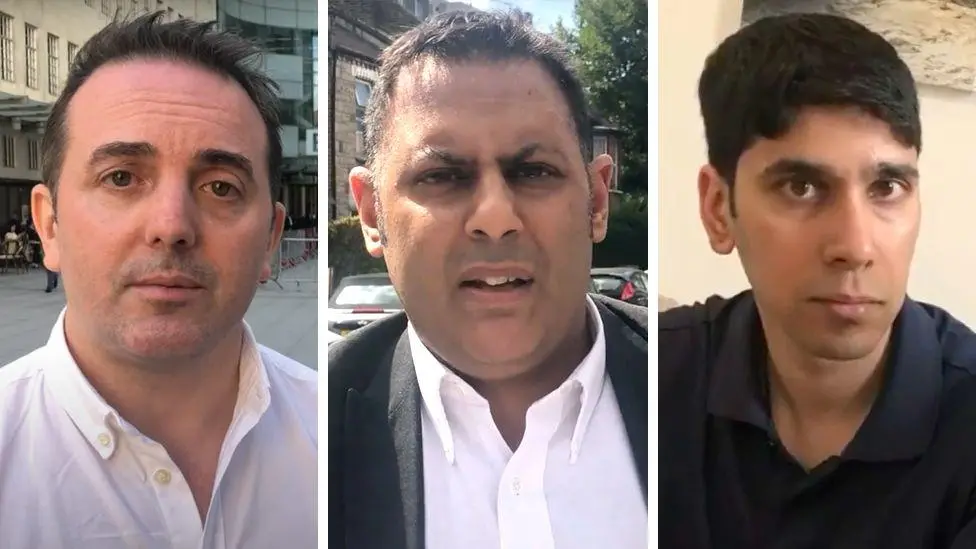

Three men guilty of harassing BBC journalist over A Very British Cult documentary have been convicted in a high‑profile case in London, marking a significant moment in the protection of journalistic freedom and public safety. This verdict follows disturbing conduct by members of a controversial organisation targeted in the BBC documentary A Very British Cult, and highlights the legal consequences when protest and objection cross into unlawful harassment.
In January 2026, at Stratford Magistrates’ Court, three men guilty of harassing BBC journalist over A Very British Cult documentary were found guilty of harassment without violence. The defendants – Kristofer Deichler (47), Jatinder Kamra (46), and Sukhraj Singh (39) – were all members of the group investigated in the BBC production A Very British Cult. These men engaged in repeated actions that the court judged to be intimidating and retaliatory, creating an environment of fear for the targeted journalist and her family.
The ruling that three men guilty of harassing BBC journalist over A Very British Cult documentary breached harassment laws comes at a time when press freedom and journalist safety are under intense scrutiny in the UK and abroad. Journalists reporting on sensitive issues, including organisations with devoted followings, face increasing risk of threats, intimidation, and harassment. The conviction in this case reinforces legal safeguards for journalists and emphasises that freedom of expression does not extend to harassing conduct.
Background: A Very British Cult and the Lighthouse Group

The BBC documentary A Very British Cult investigated the practices of Lighthouse, a UK‑based life‑coaching organisation that has drawn criticism and controversy. Lighthouse, which rebranded itself over the years and operated under several names, has been described by some former members and critics as a cult‑like organisation due to allegations of control, financial exploitation, and aggressive responses to criticism.
The A Very British Cult documentary, fronted by BBC journalist Catrin Nye, explored these issues in depth. It featured interviews with people who said they had been negatively affected by Lighthouse’s practices, as well as former members who described losing money, relationships, and autonomy. The documentary aimed to shine a light on how certain groups can influence and harm individuals under the guise of personal development.
After the documentary’s broadcast in 2023, members of Lighthouse and its supporters protested the programme, claiming that it misrepresented the group and harmed its reputation. While peaceful demonstrations took place outside BBC offices, the line was crossed when some members began approaching the home of Catrin Nye in an apparent attempt to confront or intimidate her.
Harassment Activities and Legal Proceedings
The court case began after reports that the defendants had repeatedly visited the journalist’s residence, claiming they were delivering a Bible and a letter. Prosecutors told the court that these visits were not mere protests but constituted harassment, particularly when they happened at the journalist’s home and involved attempts to obtain personal interaction.
Evidence presented in court included video footage of the men outside the journalist’s house and accounts of flyers distributed to neighbours containing the journalist’s name and picture alongside disparaging statements. The court heard that the defendants had gone to significant lengths to find the journalist’s address, including hiring a private investigator.
Though the three men maintained that they were acting as “citizen journalists” and were attempting to seek justice or responses from the BBC, the district judge ruled that their behaviour was intimidatory and retaliatory. This behaviour, the judge said, crossed the threshold from lawful protest into harassment.
Impact on Journalist and Family
During the trial, Catrin Nye and her partner gave evidence about how the visits affected them and their two young children. The couple had installed CCTV and a Ring doorbell for security and described how the experience made them fear leaving their home with their children. Nye said that the harassment had made her feel “paranoid” and significantly affected her day‑to‑day life.
These testimonies highlighted the personal cost of harassment for journalists, who often work on behalf of the public interest in telling stories that powerful or secretive groups may not want exposed. While journalism is a cornerstone of a democratic society, the safety of journalists and their families is equally vital. This case has drawn attention to the need for stronger protections for reporters facing intimidation.
Legal Context and Press Freedom
In the UK, harassment is defined as conduct that causes someone to feel alarmed, distressed, or intimidated. The conviction of three men guilty of harassing BBC journalist over A Very British Cult documentary serves as a reminder that freedom of expression—which includes the right to protest and criticise—is not absolute. It does not protect behaviour that instills fear or distress in others, especially when directed at individuals rather than institutions.
A BBC spokesperson welcomed the verdict, reiterating that “a free and independent press is fundamental to a democratic society, and it is essential that journalists are able to carry out their work without intimidation, harassment or abuse.” This statement underscores the broader principle at stake: journalists should be able to report on issues of public concern without fear of retaliation.
The Role of Documentary Journalism
Documentaries like A Very British Cult play a crucial role in investigating matters of potential public harm. By conducting in‑depth research, interviewing affected individuals, and presenting findings to wide audiences, documentary journalists provide transparency and accountability. In many cases, such reporting can lead to public debate, regulatory scrutiny, and legal action.
However, this public scrutiny can provoke strong reactions from those who are portrayed or implicated. While some responses are legitimate expressions of disagreement, others can become hostile or threatening, especially when individuals feel exposed or under attack. The conviction of these three men highlights the boundary between legitimate criticism and unacceptable conduct.
Potential Sentencing and Next Steps
Although the court found the defendants guilty of harassment without violence, sentencing was scheduled for early February 2026. The outcomes at sentencing will determine whether the offenders receive fines, community penalties, or custodial sentences. These decisions will reflect the seriousness with which the British legal system views harassment, particularly when directed at journalists performing their duties.
Observers and advocates for press freedom will be watching the sentencing closely. A strong sentence could serve as a deterrent to similar behaviour in the future, emphasising that harassment of journalists carries real legal consequences. It may also prompt discussions within media organisations about safety protocols and support for reporters who face intimidation.
Wider Implications for Media and Public Discourse
The finding that three men guilty of harassing BBC journalist over A Very British Cult documentary were guilty of harassment sends a clear message about the importance of balancing robust public debate with respect for personal safety and legal boundaries. In an era where journalists frequently face hostile environments—from online trolling to physical threats—the legal system’s stance affirms that intimidation will not be tolerated.
This case also raises questions about how society engages with controversial topics and dissenting voices. While individuals and groups have the right to challenge narratives and offer counter‑arguments, they must do so within the law and without targeting individuals. Responsible public discourse requires respect for legal frameworks that protect people from harassment and abuse.
Conclusion
The conviction of three men guilty of harassing BBC journalist over A Very British Cult documentary marks a significant legal outcome in the ongoing dialogue about press freedom, journalist safety, and the limits of protest. By upholding the law and ensuring accountability for harassment, the courts have reinforced that journalists should be able to report in the public interest without facing personal retaliation or fear.
As society continues to grapple with the challenges of misinformation, public criticism, and controversial reporting, cases like this underscore the vital role of legal protections for individuals and institutions alike. The verdict serves as a reminder that democratic values, including freedom of expression, must be balanced with personal safety and respect for the rule of law.