

ICE agent in Minnesota shooting was dragged by car in June is a headline that has emerged as part of widespread reporting following a controversial fatal shooting by a federal Immigration and Customs Enforcement (ICE) officer in Minneapolis in January 2026. Court records and official statements indicate that the same ICE agent involved in the recent incident was previously injured in a June 2025 event when he was dragged by a fleeing driver during an arrest operation. This detail has been cited by federal officials defending the agent’s actions and has also become a focal point of public debate and scrutiny.
In this comprehensive article, we explore what happened in both the January shooting and the June dragging incident, who the agent is, what the official narratives say, how local authorities and community members have responded, and the broader implications for federal law enforcement policy and accountability. Throughout, the focus keyword ICE agent in Minnesota shooting was dragged by car in June will be used naturally and clearly to anchor the discussion.
Introduction: What Happened and Why the Focus Keyword Matters
The phrase ICE agent in Minnesota shooting was dragged by car in June captures two linked law enforcement incidents that have generated national attention: a fatal shooting in south Minneapolis on January 7, 2026, and an earlier encounter in June 2025 in which an ICE agent was injured after being dragged by a vehicle. Both incidents involve federal immigration enforcement operations and have sparked debate about the methods, oversight, and use of force by ICE agents.
In the recent Minneapolis shooting, 37-year-old Renee Nicole Good, a U.S. citizen and mother of three, was shot and killed during an ICE operation. Federal officials have defended the agent’s actions, in part by pointing to his prior injury from the car dragging incident earlier in June. Meanwhile, local officials, civil rights advocates, and community members have raised questions about transparency, accountability, and whether the use of deadly force was justified.
Understanding the June Incident: ICE Agent Dragged by a Vehicle
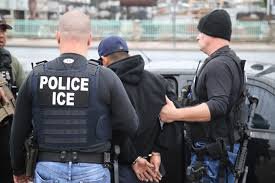
The focus keyword ICE agent in Minnesota shooting was dragged by car in June refers primarily to an incident that occurred on June 17, 2025, when an ICE officer was injured while attempting to arrest a suspect during a routine enforcement action in the Minneapolis-St. Paul area. According to federal court records and Department of Homeland Security (DHS) statements, the agent was trying to detain a man identified as Roberto Carlos Muñoz-Guatemala, a Guatemalan national with prior criminal convictions.
During that June operation, officers attempted to pull Muñoz-Guatemala over and carry out an arrest. When he refused to roll down his window or comply with officers’ orders, the agent reportedly broke the vehicle’s rear window and reached inside in an effort to unlock the door. As Muñoz-Guatemala drove off, the agent’s arm became trapped, and he was dragged along the street for an extended distance as the vehicle accelerated and weaved to try to shake him off.
The agent ultimately freed himself and suffered multiple lacerations and other injuries that required stitches and medical treatment in the hospital. DHS officials noted that he sustained significant cuts and abrasions, and that the encounter was captured on video.
Legal proceedings from the case resulted in a federal conviction for the driver on charges including assaulting a federal officer with a dangerous or deadly weapon. This June dragging incident is directly referenced by federal authorities to provide context for the agent’s experience and perceived threat assessment in later operations — including the January shooting.
January 2026: The Minneapolis Shooting and the Focus Keyword
The second part of the focus keyword ICE agent in Minnesota shooting was dragged by car in June links the June 2025 injury to the January 2026 fatal shooting of Renee Nicole Good in Minneapolis. On January 7, 2026, an ICE operation in south Minneapolis that involved federal agents executing immigration enforcement actions—including detaining individuals with criminal records—escalated into a deadly use of force.
According to federal officials, during the Minneapolis incident, Good was in her vehicle near where agents were operating. Reports indicate that she refused commands to exit her vehicle and that she drove her SUV in a manner that federal authorities described as threatening — allegedly striking the agent or moving toward him. The ICE officer then fired multiple shots, killing Good.
Local video of the incident shows Good’s vehicle near agents and indicates a rapid set of movements immediately before shots were fired, leading to disputes over whether she was trying to flee or posed a direct threat. These conflicting accounts have contributed to intense public debate.
Who Is the ICE Agent?
The focus keyword ICE agent in Minnesota shooting was dragged by car in June also points to the identity and background of the officer involved in both incidents. Federal court records and news reporting identify him as Jonathan E. Ross, a long-serving member of ICE’s Enforcement and Removal Operations (ERO) Special Response Team with nearly a decade of service and prior military experience.
Ross has served with ICE in various enforcement capacities in Minnesota since at least 2017. According to records, he has a background that includes deployment during the Iraq War and has received military commendations. These details have been cited by DHS officials to characterize his training and readiness for high-risk operations.
Despite these credentials, Ross’s role in both the June dragging incident and the January shooting has raised questions about his judgment, tactics, and the broader policies guiding ICE field operations.
Federal Response and Rationale
Federal authorities, including DHS and ICE leadership, have justified the actions of the agent involved by emphasizing the hazards inherent in enforcement operations, noting both the June 2025 dragging and the perceived threat during the Minneapolis encounter. Homeland Security Secretary Kristi Noem and other officials have described the January shooting as a lawful use of force in self-defense, asserting that the agent was placed in a situation where he reasonably feared for his safety.
Officials have also insisted that agents follow departmental policies on the use of force and that the agent involved is experienced and trained. This narrative underscores the argument that previous traumatic encounters — like being dragged by a vehicle — inform an officer’s threat assessment in volatile situations.
In response to the Minneapolis shooting and subsequent protests, the DHS has deployed additional federal personnel to Minnesota, describing it as part of maintaining public safety amid heightened tensions. This marks one of the largest federal law enforcement deployments in the region’s history.
Local and Community Reaction
While federal officials defend their agent’s actions, local authorities and community leaders have strongly contested federal narratives — especially the characterization of Good’s actions and the degree to which video evidence supports claims of imminent threat.
Minneapolis Mayor Jacob Frey condemned the DHS’s explanation, dismissing parts of the federal account as inaccurate and urging ICE to limit its operations in the city. Minnesota Governor Tim Walz also expressed frustration at being excluded from investigatory cooperation, arguing that local investigators should have access to evidence and a role in the inquiry.
Community members, civil rights activists, and relatives of Good have held protests and vigils, drawing attention to video footage that some say shows Good’s vehicle was not used as a weapon and that she appeared to be attempting to drive away, not attack. These interpretations challenge the federal defense of the shooting.
Political and Policy Implications
The focus keyword ICE agent in Minnesota shooting was dragged by car in June also highlights broader political debates over immigration enforcement tactics, federal accountability, and the use of deadly force by federal law enforcement.
Lawmakers across the political spectrum have weighed in. Some Republican leaders have echoed federal support for the agent, emphasizing the dangers faced by law enforcement and the need to uphold authority against non-compliance. Others have criticized what they see as premature defense of the agent and called for transparent investigations.
Democratic lawmakers and civil rights advocates argue the case underscores longstanding concerns about ICE’s oversight, training, and engagement strategies, and many have called for reinstated restrictions on how federal agents interact with civilians, particularly in interior communities far from the border.
This case has also spurred renewed discussions about whether local and federal agencies should share authority in investigations, how use-of-force policies are applied, and what reforms might be necessary to prevent similar tragedies in the future.
Ongoing Investigations and Accountability
Investigations into both the January shooting and the June dragging incident continue. Federal authorities have maintained jurisdiction over the use-of-force inquiry in the Minneapolis case, while local law enforcement and prosecutors have sought greater access to evidence and collaboration. The Federal Bureau of Investigation has been involved in aspects of the inquiry, and Minnesota’s Bureau of Criminal Apprehension has been criticized for being sidelined.
Legal experts note that federal agents generally have broad immunity in enforcement actions, complicating potential state prosecution — but that civil suits, federal reviews of policy compliance, and internal disciplinary processes could unfold over months or years.
Conclusion: What the Focus Keyword Reveals
The phrase ICE agent in Minnesota shooting was dragged by car in June connects two high-profile federal enforcement incidents that have wide-ranging implications. It points to:
- A June 2025 incident where an ICE agent was injured after being dragged by a vehicle during an arrest attempt.
- A January 2026 fatal shooting in Minneapolis involving the same agent.
- Ongoing debates over law enforcement tactics, force, transparency, and accountability.
- Federal and local tensions over investigatory access and narrative control.
- Community outrage and political discourse on immigration policy.
Whether viewed through legal, policy, community, or public safety lenses, this linked history involving the ICE agent serves as a focal point for discussions that extend far beyond a single incident.