

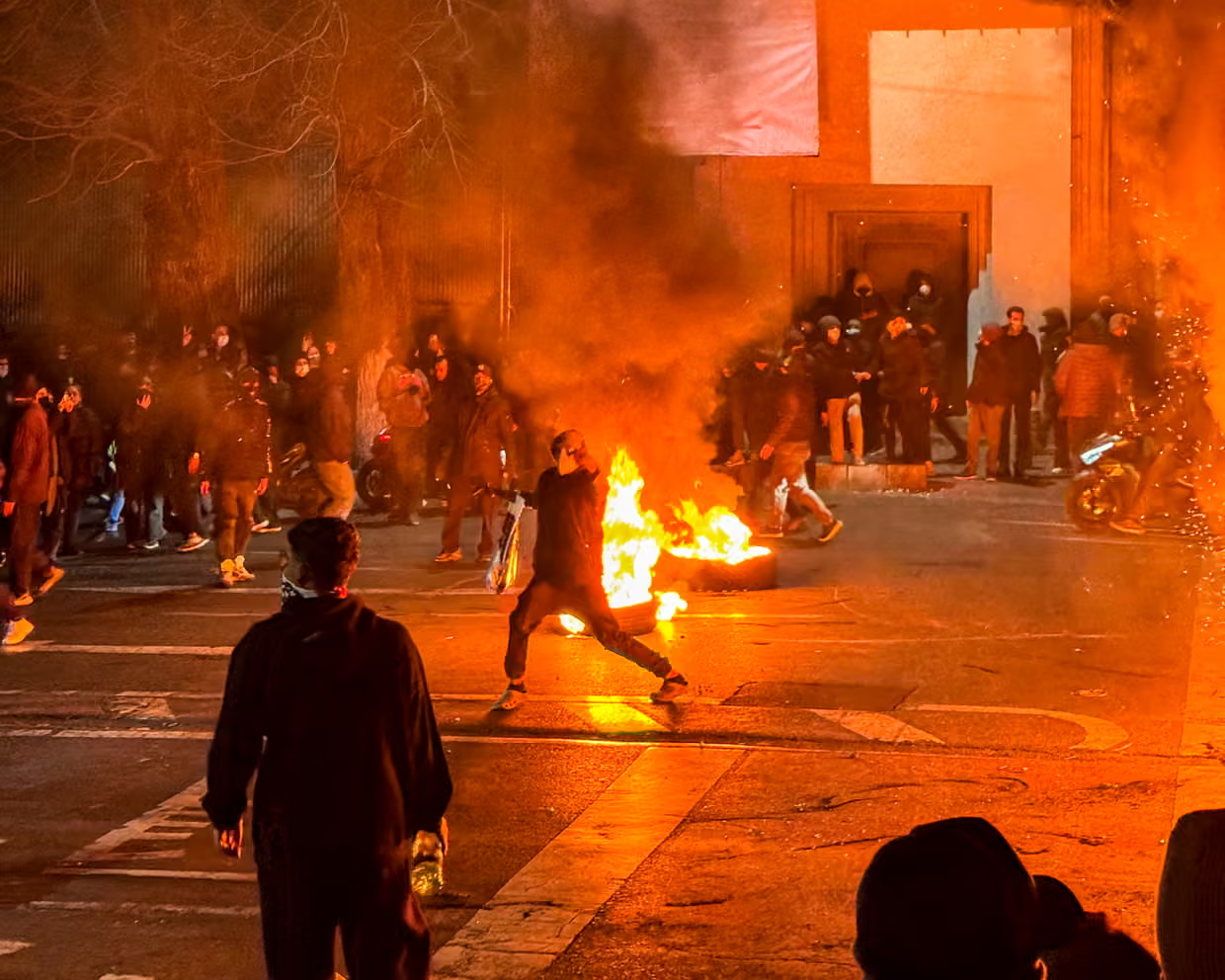
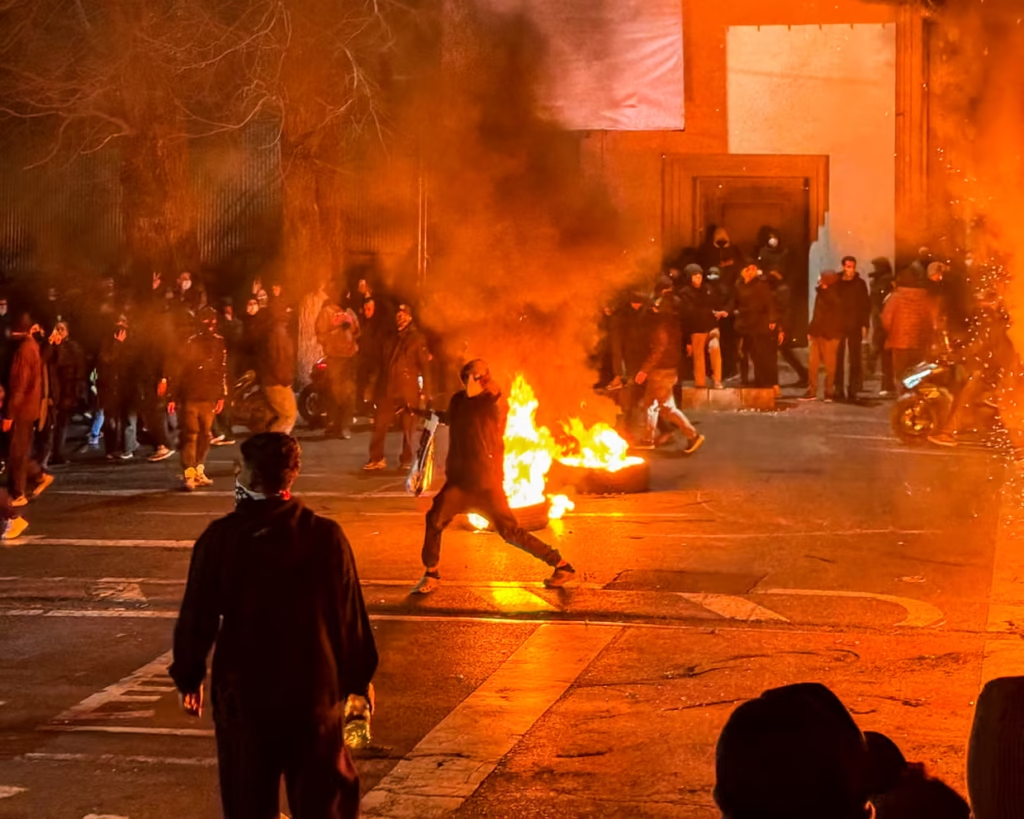
Iran warns it will retaliate if US attacks — this focus keyword reflects the core of the unfolding geopolitical situation and the severe internal unrest within Iran. In recent weeks, the country has been thrust into a new and dangerous phase of instability, with hundreds reportedly killed during widespread protests while Iranian leadership issues sharp warnings to the United States. This article provides an informative, balanced, and easy-to-understand overview of the situation, examining its origins, implications, motivations, and potential global outcomes.
Introduction: A Nation Under Intense Pressure
Iran is facing one of the most turbulent periods in its recent history. Domestic protests have escalated into a nationwide crisis, sparked by public anger over economic hardship, political repression, and perceived government corruption. According to reports from multiple human rights groups, the death toll among demonstrators has reached a level unprecedented in the last decade.
Simultaneously, Iran’s leadership has issued strong warnings to the United States, declaring that any military strike or covert operation against Iranian targets would be met with decisive retaliation. This combination of internal unrest and escalating international tension has generated widespread concern across the Middle East, the United States, and the international community.
This article explores how events have unfolded, why Iran is issuing threats, and how internal turmoil intersects with foreign policy decisions.
Background: Why Protests Erupted
The protests that began sweeping across Iran were triggered by a combination of social, economic, and political issues. Several contributing factors include:
1. Economic Hardship
Decades of sanctions, mismanagement, and corruption have weakened Iran’s economy. High inflation, rising food prices, and record unemployment have added to the frustration felt by millions of Iranian citizens.
2. Public Outrage Over Government Crackdowns
Protesters initially took to the streets demanding accountability and reform. However, heavy-handed security measures—including internet blackouts, mass arrests, and widespread use of force—fueled further anger.
3. Discontent With Leadership
Many Iranians, especially the younger generation, have been calling for greater freedoms and political change. The protests reflect deep dissatisfaction with the structure of power and governance in the Islamic Republic.
4. Lack of Public Trust
Long-standing mistrust between citizens and the state has intensified. Accusations of corruption, lack of transparency, and perceived disregard for public welfare have amplified the unrest.
Together, these factors created a combustible environment that rapidly escalated into mass demonstrations across cities including Tehran, Shiraz, Mashhad, Isfahan, and others.
The Government Response and Rising Death Toll
Reports from human rights groups and independent observers indicate that security forces have used live ammunition, tear gas, and other crowd-control measures to disperse demonstrators. Internet shutdowns have made it difficult for reliable information to emerge, but estimates suggest hundreds have been killed, including women and minors.
The government’s response has included:
- Curfews in major cities
- Widespread arrests of activists, journalists, and students
- Deployment of Revolutionary Guard units
- Restrictions on communication and social media
- Accusations that foreign governments are “interfering”
Despite the crackdown, protests have continued, underscoring the depth of public resentment.
Iran’s Warning to the United States
As protests intensified, Iranian leaders began issuing warnings to the United States. The statement “Iran warns it will retaliate if US attacks” has been repeated by high-ranking officials, military commanders, and state-controlled media outlets.
Why Iran Issued the Warning
There are several strategic reasons Iran may be emphasizing the threat of retaliation:
1. Deterrence
Iran wants to discourage the United States from supporting opposition groups or taking military action during a moment of internal weakness.
2. Preserving Regional Influence
Iran’s leadership wants to project strength to its allies, including groups in Iraq, Syria, Lebanon, and Yemen who rely on Iranian support.
3. Domestic Messaging
By focusing attention on an external enemy, Iran aims to unite supporters and shift public discourse away from domestic grievances.
4. Negotiating Strategy
Tough rhetoric may be a way to influence ongoing international negotiations, including nuclear discussions.
The United States’ Position
The U.S. government has expressed concern over the violence against protesters and has condemned human rights abuses. However, U.S. officials have also signaled caution, avoiding direct threats of military escalation.
The U.S. has instead focused on:
- Diplomatic pressure
- Sanctions against Iranian officials
- Support for internet access initiatives
- Statements backing the rights of peaceful demonstrators
While the U.S. has not indicated plans for a direct attack, Iran’s leadership continues to frame the United States as a key driver of unrest.
Regional Implications of Rising Tension
The Middle East is a region where local conflicts can quickly have international consequences. Iran’s warnings, combined with the domestic crisis, create instability that affects neighboring countries and global markets.
Impact on Oil Markets
Iran’s threats have raised concerns about potential disruptions to oil supply lines, especially through the Strait of Hormuz—a vital passageway for global energy shipments. Any military escalation could lead to:
- Rising oil prices
- Disruptions in shipping
- Greater economic pressure on global markets
Impact on Neighboring Countries
Countries such as Iraq, Kuwait, Saudi Arabia, and the UAE may face increased tension if Iranian-allied groups seek to support Iran’s position or retaliate against U.S. assets in the region.
Possible Scenarios if the Crisis Escalates
There are several potential ways the situation could develop. Understanding these scenarios helps clarify the risks and possible outcomes.
Scenario 1: Increased Internal Crackdowns
If protests continue, the Iranian government may intensify its security measures, leading to more casualties and arrests. This would likely escalate public anger and could prolong unrest.
Scenario 2: Limited U.S. Engagement
The United States may continue to apply diplomatic and economic pressure while avoiding military action. This could help prevent escalation but may not address underlying tensions.
Scenario 3: Proxy Conflict Escalation
Rather than direct conflict, Iran and the U.S. may engage through proxy forces in Iraq, Syria, or Yemen, increasing instability across multiple battlegrounds.
Scenario 4: Diplomatic Resolution
Although difficult, negotiations—possibly mediated by Europe or the UN—could reduce tensions if both sides see strategic benefit.
Iran’s Military Capabilities and Retaliation Threats
When Iran warns it will retaliate if the U.S. attacks, it references a range of military and paramilitary tools:
1. Ballistic Missile Program
Iran possesses one of the largest missile arsenals in the region, capable of striking U.S. bases in the Middle East.
2. Naval Capabilities
Iranian forces can disrupt shipping routes in the Gulf using speedboats, mines, and drones.
3. Regional Proxy Groups
Iran maintains ties with non-state actors across the Middle East who could carry out attacks on its behalf.
4. Cyber Capabilities
Iran has been linked to cyber attacks targeting government and business systems worldwide.
These capabilities give Iran multiple avenues for retaliation, contributing to regional volatility.
Internal vs. External Priorities: A Government Under Strain
A key dynamic in this crisis is the conflict between Iran’s internal needs and its external ambitions.
Internal Priorities
- Controlling unrest
- Maintaining legitimacy
- Addressing economic pressures
- Preventing political fragmentation
External Priorities
- Deterring U.S. intervention
- Preserving regional influence
- Maintaining alliances with proxy groups
- Projecting strength internationally
Balancing these priorities has become increasingly difficult for Iran’s leadership.
The Role of Social Media and Information Control
Despite government-imposed restrictions, videos and reports of the protests have circulated widely online. Social media has played a significant role in:
- Documenting human rights abuses
- Mobilizing public gatherings
- Attracting international attention
- Challenging official narratives
Iran’s frequent internet shutdowns show the government’s struggle to control information flows.
International Reaction
Governments and organizations around the world have expressed concern over the situation in Iran.
European Union
The EU has criticized the crackdown and suggested new sanctions on officials responsible for violence.
United Nations
UN human rights experts have called for investigations into the deaths of protesters.
Middle Eastern States
Reactions in the region vary, with some governments urging restraint while others express concern about potential spillover effects.
Long-Term Consequences
The intersection of domestic unrest and foreign threats poses significant long-term risks for Iran:
1. Continued Economic Decline
Prolonged instability may deter investment, increase sanctions, and weaken the economy further.
2. Social Fragmentation
The divide between government and citizens may deepen, potentially leading to recurring cycles of protest.
3. Diplomatic Isolation
Aggressive rhetoric toward the U.S. and violence against civilians may push Iran further into international isolation.
4. Strategic Miscalculation
Escalating tensions may lead to unintended military confrontations, particularly involving regional actors or proxy groups.
Conclusion
The situation in Iran is a complex and volatile mix of domestic turmoil and international brinkmanship. The focus keyword “Iran warns it will retaliate if US attacks” captures only one part of a much larger crisis that includes widespread protests, a deadly government response, and mounting geopolitical tension.
As hundreds are reported killed in protests and Iran’s leadership issues strong warnings to the United States, the country stands at a critical crossroads. The path forward will depend on how the government responds to domestic demands, how the international community engages with Iran, and whether diplomacy can prevent the crisis from escalating into regional conflict.